
My Virtual Studio: Watercolor pencils
Some folks want to get to watercolor – but the journey there feels like a huge leap – we’re not used to holding brushes. We don’t understand the movement of water. Isn’t there an easier way to get from here to there?
Watercolor pencils bridge that journey, in my opinion! The comfort that comes with the familiar pencil eases the first step of adding color….then the water is added with a brush later. While it can still be intimidating, at least part of the process feels under control!
Another plus of watercolor pencils is that they aren’t expensive (even though a full set of good ones can be a couple hundred dollars). The same number of colors in other mediums can make these look cheap!
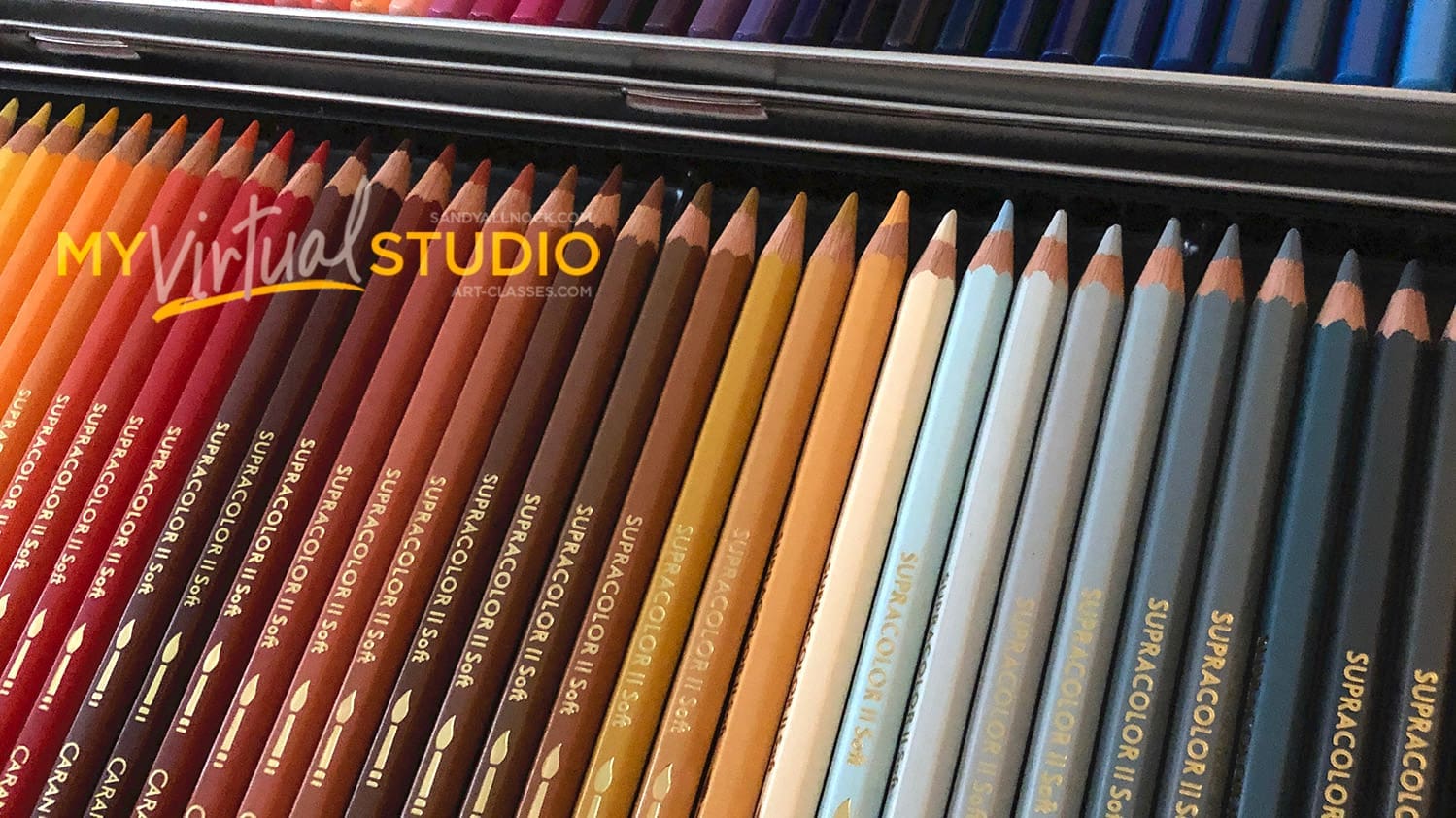
Quality of watercolor pencils
As with any art supply, there are artist-grade, student-grade, and child-grade watercolor pencils. How do you know which is which? One of the most obvious: if it’s expensive, it’s more likely a quality brand! I know, that’s not a scientific way to know, but it’s relatively reliable. A few properties you get for the money:
- Better pigmentation – when you put down color, you get a lot of color on the page. Less quality pencils will require multiple layers to build up color.
- Softer touch – the pencil “feels” softer gliding across the surface; when using a low quality pencil, it feels like a harder pencil and you’re tempted to press harder to get more more color out of it.
- Better solubility – when water is applied, the pigment breaks down quickly and turns into watercolor. Cheaper pencils are hard to “wet” satisfactorily.
- Lightfastness – after long exposure to light, the colors remain when lightfast.

While I haven’t tried all brands, I’ve tested enough to be able to recommend a few brands. I do find that the half-sets of these are really diverse in the colors included, so if you get one of those you should be happy!
Albrecht Durer by Faber Castell: These have been a favorite for years! They come in a beautiful collection of colors, they’re easy to apply and melt easily with water. You can purchase singles, too – so even if you have another brand and just want to fill in some favorite colors that work nicely, you can get just a few! Pencil body color matches the pigment color.
- Albrecht Durer by Faber Castell, full set of 120 – EH or AMZ or BLICK
- Albrecht Durer by Faber Castell, set of 60 – EH or AMZ or BLICK
- Albrecht Durer by Faber Castell, singles – BLICK
Supracolor by Caran d’Ache: I purchased these in 2019, and am very happy with the recommendation! These are Caran d’Ache’s “more reasonably priced” line of watercolor pencils – and I’d say they’re comparable to Albrecht Durer, perhaps slightly more pigmented in some of the colors. Either of these two are an excellent purchase. Pencil body color matches the pigment color.
- Supracolor by Caran d’Ache, full set of 120 – AMZ or BLICK
- Supracoloor by Caran d’Ache, set of 80 – AMZ or BLICK
Museum Aquarelle by Caran d’Ache: A very high quality pencil – about 4 times the price of the others. The color melts beautifully, they feel almost creamy when applied. They come in a bunch of different sets by color collection, and have now been released as a full set. These also come in singles to try just a few. Pencil bodies are all the same dark grey with a little of the pencil color on the back end of the pencils.
- Museum Aquarelle by Caran d’Ache, set of 76 – AMZ or BLICK
- Museum Aquarelle by Caran d’Ache, set of 40 – BLICK
- Museum Aquarelle by Caran d’Ache, set of 20 landscape – BLICK
- Museum Aquarelle by Caran d’Ache, set of 20 marine – BLICK
- Museum Aquarelle by Caran d’Ache, set of 12 intro – BLICK
- Museum Aquarelle by Caran d’Ache, singles – BLICK
Inktense by Derwent: Bright, intense colors; these are more like an ink than a true watercolor, as they dry mostly permanently, allowing another layer on top without moving the layer below. Very common among crafters due to the intensity of color, but are more challenging because they are more difficult to melt with water; try using a smoother watercolor paper to accomodate this. Pencil bodies are all the same dark blue with a little of the pencil color on the back end of the pencils. Available as singles.
- Inktense by Derwent, full set of 72 – EH or AMZ or BLICK
- Inktense by Derwent, set of 36 – EH or BLICK
- Inktense by Derwent, singles – BLICK
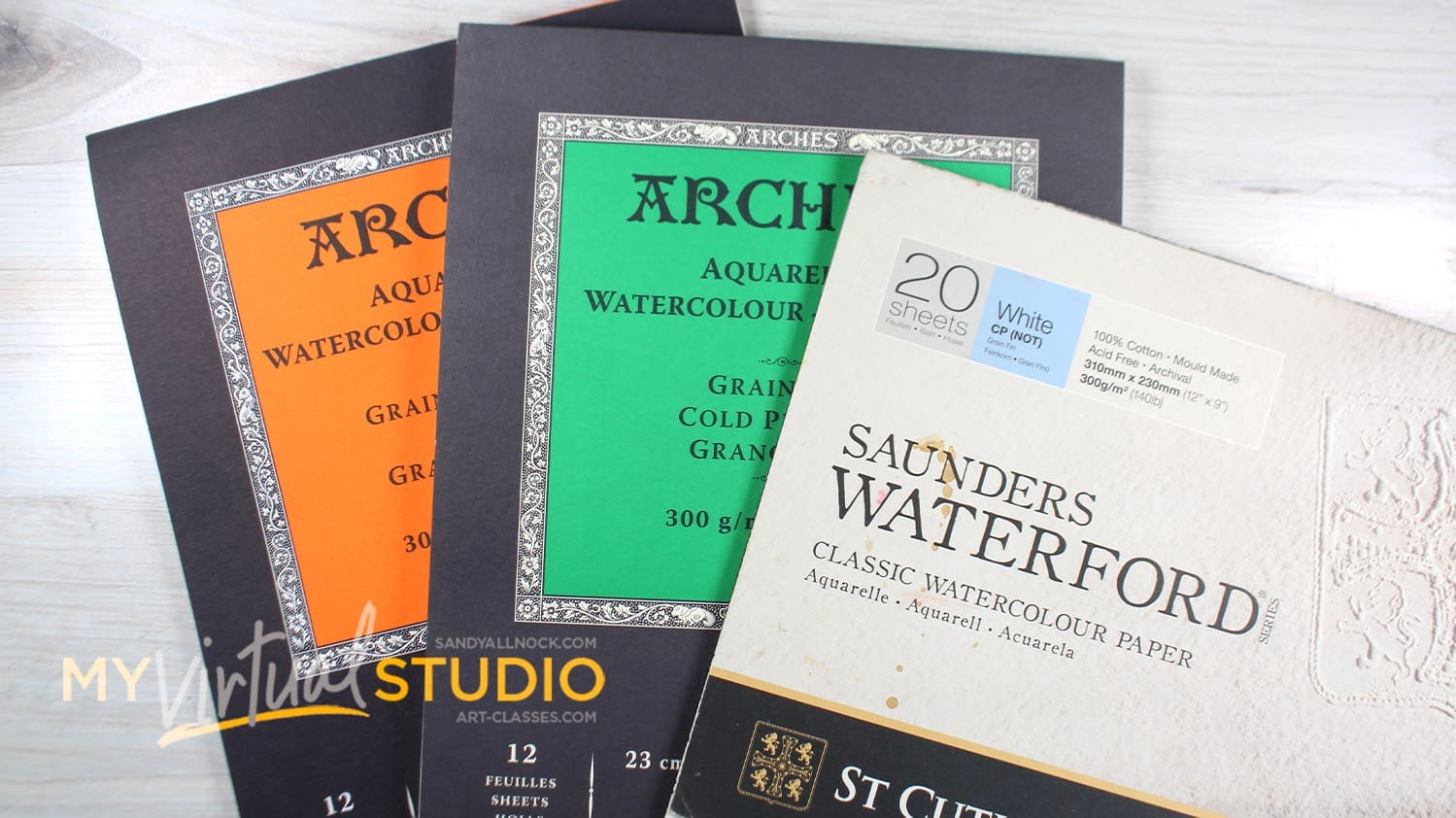
Papers
Papers to use with watercolor pencils are generally the same as in the Watercolor Papers and Sketchbooks lesson, with a few caveats. The more textured the paper, the more pigment is usually “scraped” off the pencil as it is applied, and the less pigment is removed with the brush since color settles into the valleys of rough papers. Smoother papers accept less pigment and more of it can be lifted with a brush – so while smoother papers like hot press allow for easier blending with water, they can result in less intensity of color.
- Arches Cold Press 9×12 pad EH or AMZ or BLICK
- Arches Rough – EH or AMZ or BLICK
- Arches Hot Press – EH or AMZ or BLICK
- Saunders Waterford Cold Press – BLICK
- Saunders Waterford Rough – BLICK
- Saunders Waterford Hot Press – BLICK
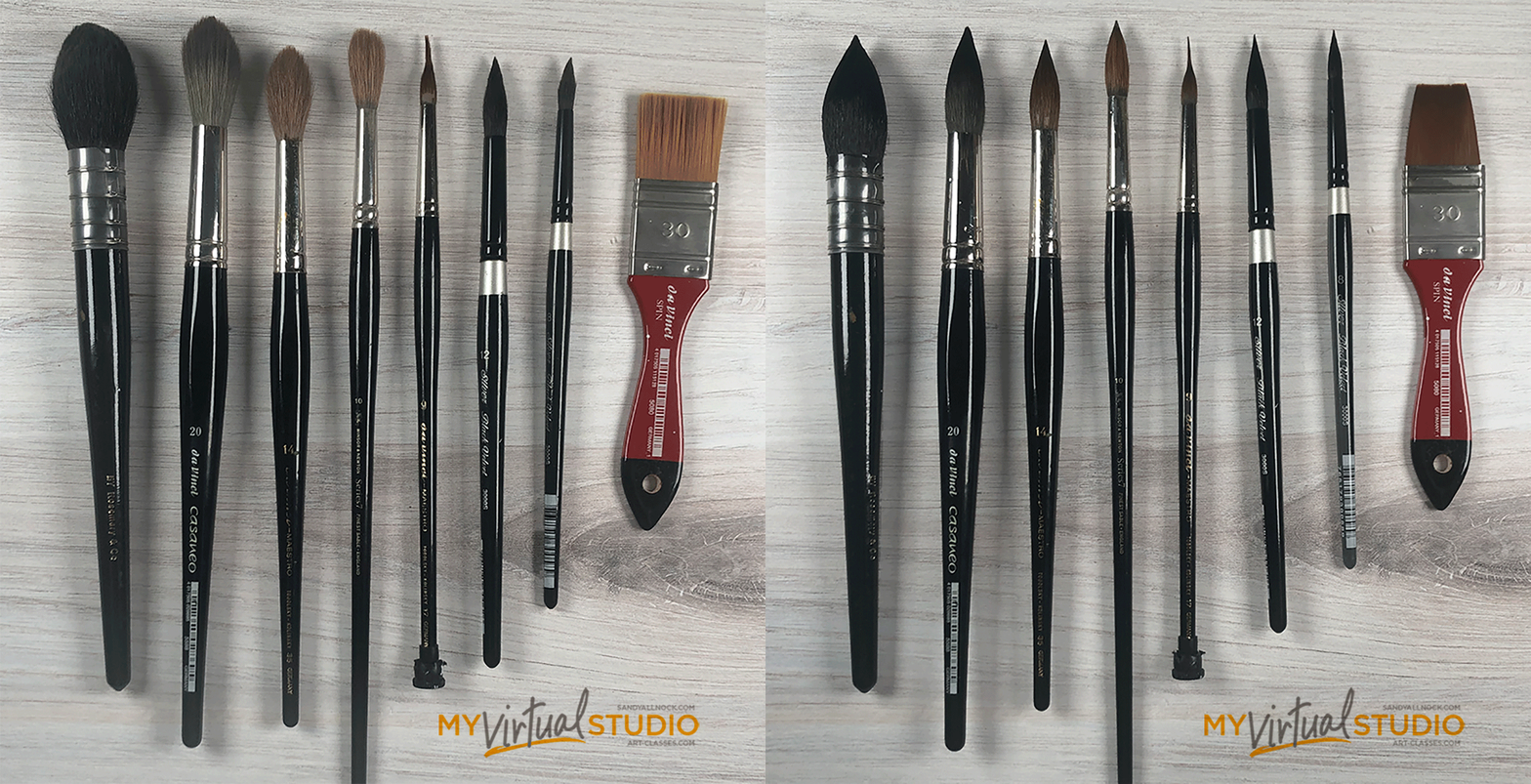
Brushes
See more about brushes in the Watercolor Brushes and Accessories lesson, but – generally I find smaller brushes work better with pencils, so have removed the largest ones and brushes with tips that aren’t helpful. Recommended for crafters:
- Silver Brush Black Velvet, Short Round 12 AMZ or EH or BLICK
- Silver Brush Black Velvet, Short Round 8 AMZ or EH or BLICK
High end brushes: - daVinci Maestro Kolinsky Sable Brush – Round, Short Handle, Size 14 BLICK
- Winsor & Newton Series 7 Kolinsky Sable Brush – Pointed Round, Size 10 – BLICK
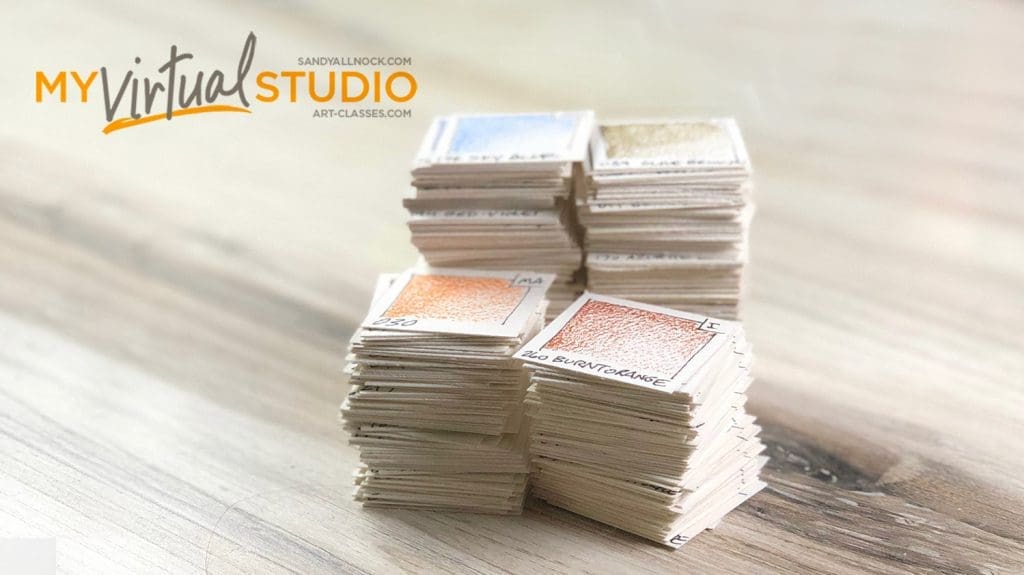
On swatching watercolor pencils
A tip in general about swatching any product: do the swatching on good paper that will be used for finished projects! Creating them on cheap paper just so you don’t “waste” it on swatches can result in samples of color that won’t at all match your finished work.
I have a number of watercolor pencil brands and set up a system to put the initials of the set in the upper right corner of each swatch – you can decide how to “code” yours.
Join our creative community! Our Student Facebook Group is for all classes here …and while there are no finished projects in this class, you’re welcome to join the group and get an idea of what kind of beautiful works can be created from learnings in classes on this website!
Discover more from Art Classes
Subscribe to get the latest posts sent to your email.