
Nature Journaling: Winter preclass
Welcome to the Preclass lesson for Nature Journaling in winter!
Before we start…a little housekeeping
I retain the copyright to the content you are learning in class. That means…
- Do not sell or give away the concepts from my classes – you may not re-teach my instruction contained or created within these lessons.
- Do not post a video tutorial or step by step photo tutorial of your own redraw of class content.
- Do not repost any handouts you receive in class.
However…I love to see students making strides and taking this teaching and personalizing it with your own skills.
- DO make your own designs and develop your own style! I love that!
- DO gift your creations made with these techniques, of course!
At the bottom of each lesson you’ll see some ways to share your homework and ask questions, so that’ll be handy for you.
Video:
We’ll start with supplies – and a little basics of color theory. In this course, the monthly demos will be painted with the warm and cool trios shown, though other lessons may include other colors too. But color knowledge is helpful no matter what medium you’re using!
Supplies may be affiliate links – supporting my work with a percentage paid to me at no cost to you:
Watercolors
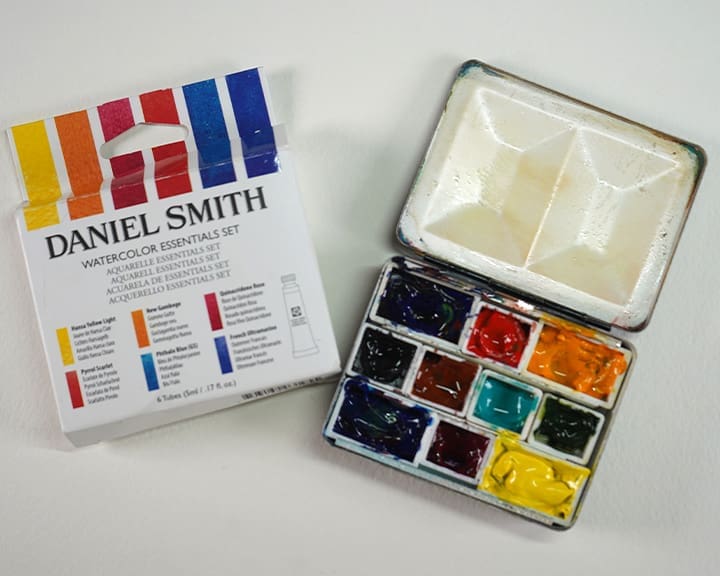
I love using Daniel Smith paints; I was lucky enough to get started with them after a quick dabble with crafty colors, and saw the difference early on. Good paints and paper can give those “watercolor edges” we think of as gorgeous, and the cheap ones didn’t do that for me.
If you want to try out some Daniel Smith colors, I recommend their “Essentials” set of 6 that I’ll use for this course so we can talk about mixing color; Pick them up at Blick or Amazon.
You can either get a mini palette for them like I have, or just squeeze out some color on a white ceramic dish or tile (pick one up at a hardware store for about a dollar) and not have to invest in another art supply! Dry paints will reconstitute with water so you can just leave them on that surface and paint again another day.
Brushes
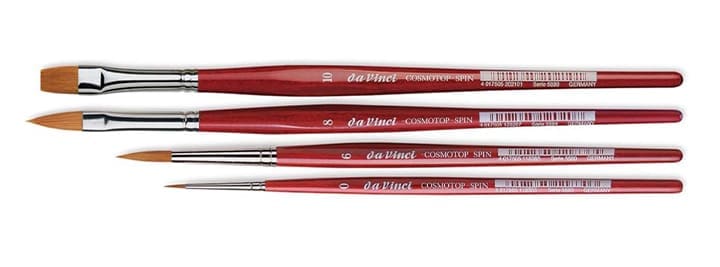
Small brushes for small sketches will really help; I’ll have 3 sizes at hand when creating videos for the class. Again, for sketching without big washes, any decent brand (ie not dollar store or unnamed craft store types) will be fine – I like DaVinci and will be using their synthetic Cosmotop Spin set of four (Round sizes 0 and 6, one size 10, and one Oval Wash size 8) is what I’ll be using, and you can get them here.
Pens
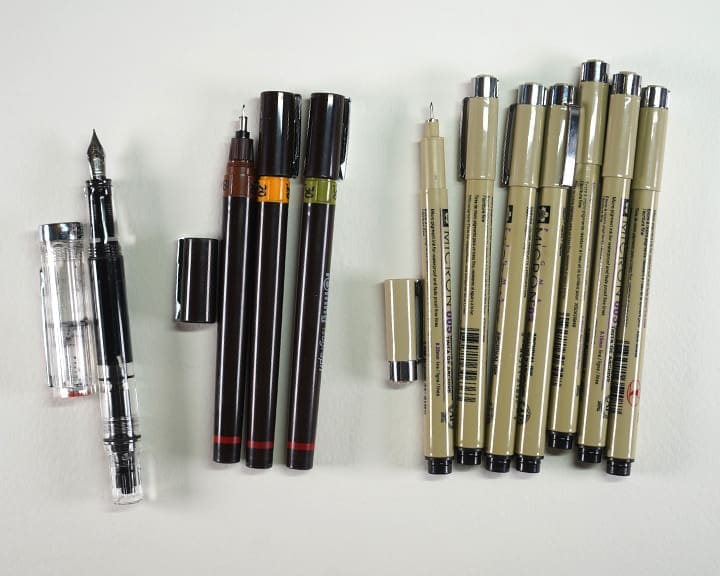
I recommend some nice thin pens for these small drawings; a fountain pen is great (I love me a TWSBI Eco!), technical pens like the Rotrings I’ll be using – or microns are great too! This set is one I used during the Ink Drawing Jumpstart class and can recommend it – it’s got a great range of sizes of nibs. You can pick that set up here.
Sketchbooks
This is where you get all KINDS of freedom! I’m preparing to use a lot of sketchbooks throughout the year. You can have just one to start with and decide to switch it up if you fill the first one! Below are photos of each of mine, and I don’t promise I won’t add another to my collection as 2026 wears on. LOL!
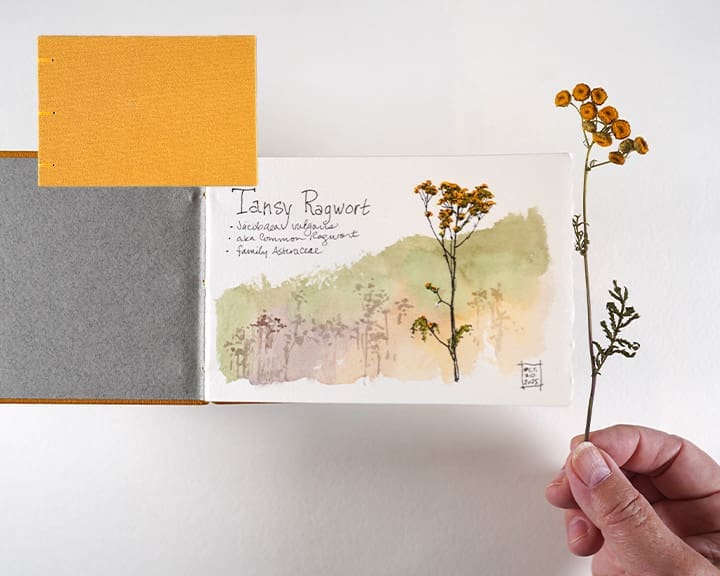
- Lake Michigan Book Press: My friend Crystal makes hand-bound (stitched!) sketchbooks, and she had a sale on some samples she wanted to get rid of that have Arches cold press in them. By the time I clicked, there was a yellow one left – so I snagged it! You can order a custom one from her in all kinds of sizes with whatever kind of paper you’d like….this one is listed as “medium” on her website here.
Moleskine: These come in many sizes and shapes, and I’m trying out a square one – this paper does buckle a little but if I’m careful I think it’ll work nicely. You can see this one on Amazon here.
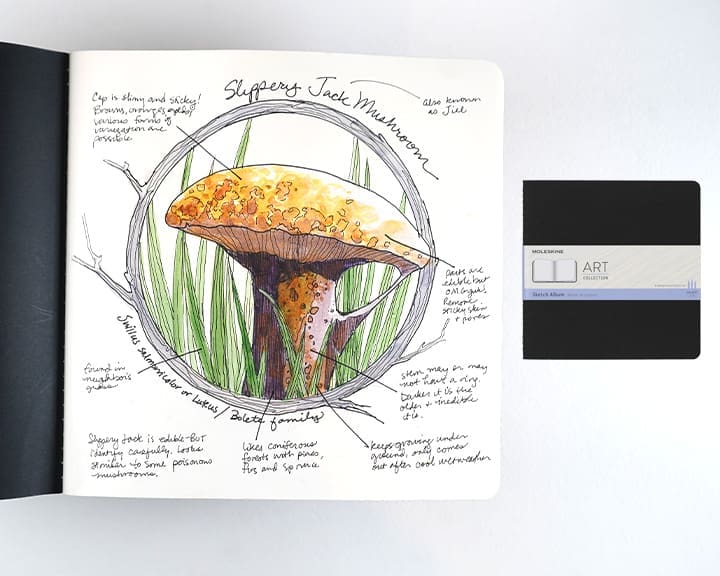
Pentalic Nature Sketch: It had the word nature on the cover so of course I tried it out! The paper does buckle evvvver so slightly, but not in a bothersome way. Pick up that sketchbook here.

Pentalic Aqua Journal: Love love love these books for wash and ink. Bigger washes work fine, though you’ll see a little difference between the front and back sides so play with it to see how much water you want to use on either. They come in different sizes, and I picked up a new 6×6” one for this class, which you can get here.

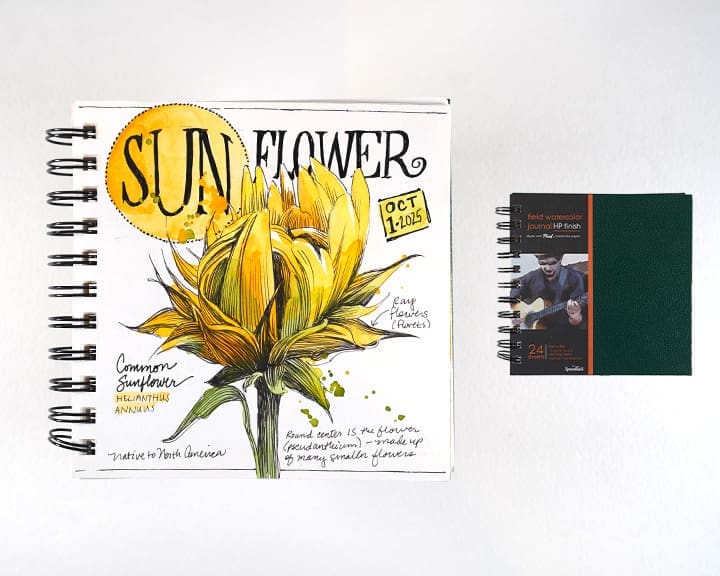
Speedball with Fluid100 Cold Press paper: I do love the size of this sketchbook a lot, and the hard cover with spiral means you can take it out easily to work on-site. You can pick that one up here.
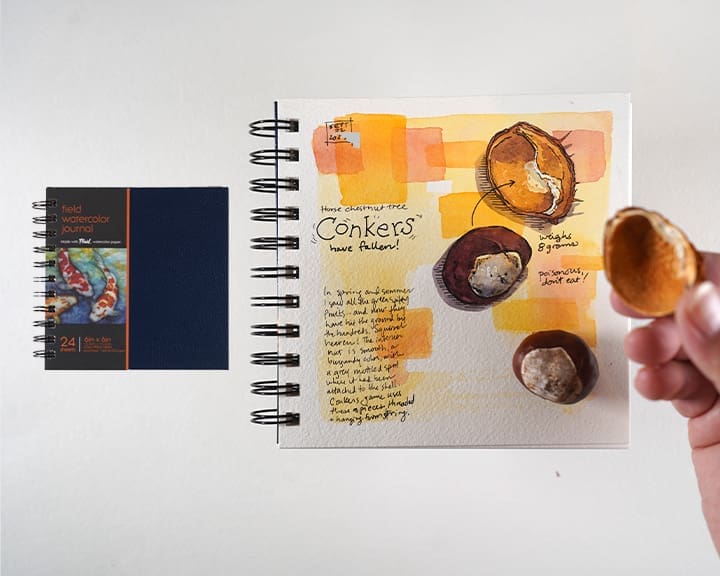
Speedball with Fluid100 Hot Press paper: Another version of the above sketchbook – and this time with hot press paper. Which I’m glad I picked up because it might be the first hot press paper I enjoy working on! That one is available here.
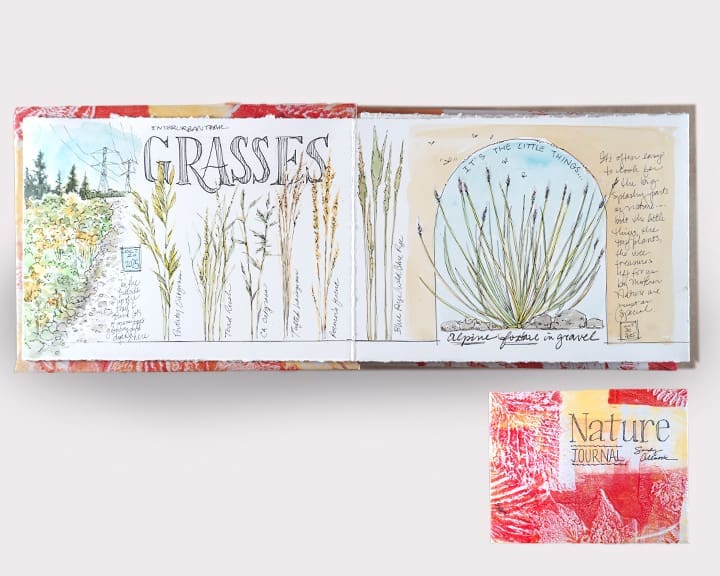
DIY no-stitch sketchbooks
Would you like to make your own sketchbook with your own favorite paper for the medium you want to use? Watch the video below the sample sketch for two ways you can do just that!
A few bare minimum other materials:
Pencils: You can use a number 2 pencil, but you might like to get a little set of pencils and try out different hardnesses to see what you like. I recommend this little Staedtler Mars Lumograph pencil set of 6 at Blick or Amazon.
White pens: A Copic Acrea pen is my go-to white pen, it can cover more than a gel pen does, sometimes.
White paint: White gouache can be “flicked” off of a toothbrush for winter snow, or painted onto areas to cover them. Or even to mix with watercolors to create real pastels for tiny flowers, too.
Pencil case: I keep a little Rustic Town Leather Zipper pouch with pencils, erasers, and pens, and my little palette fits in there too.
In the class you most certainly can add anything else to your art – colored pencils! Watercolor pencils! Acrylic! Collage! During weeks 2, 3, and 4 I may do gelli printing or other crazy things, but you aren’t expected to – I hope this class will inspire everyone to try all kinds of fun things to enhance their art pages!
For beginners at drawing
This course is listed as a level 1/2 class; it’s not a drawing course, since each of us will be drawing things in our own environments. But if you’re new to drawing anything, let me give you permission to trace if you need to! At least for a while. If you’re a trace-er and are looking for tips to wean yourself off of it, read the tips below this video.
How to wean yourself from tracing
-
Remember that the foundation of your finished paintings or drawings in any medium is on the underlying sketch. If you don’t improve the drawing part and get the proportion or perspective right, then the watercolor on top won’t matter.
-
When starting to trace you’ll be tempted to draw every last little bit. Slowly reduce the amount that you trace into your image, and practice filling in the gaps yourself.
-
Try making marks for the locations of elements. For instance, if drawing a banana, make a little mark through the tracing paper at the top and bottom of the banana, and a few reference points around the banana – maybe 3 or 4 on each side. then practice joining those lines yourself using the right kind of curves.
-
Create your traced lines with as light a pressure as you can get away with so it gives you a hint of the locations, angles, and curves. Then use a pencil and your hand to go over them. Practice making those lines clean and steady.
-
Start a practice sketchbook – if it helps, promise yourself no one will EVER see inside it. And start to make drawings of things in regular life around you. Your morning coffee cup, your dog sleeping in the sun. Don’t worry if it’s not perfect, just do it a lot. Every day.
10 Tips to improve your nature journaling
As a promotion for this course I published this video on Youtube….if you haven’t seen it yet, give it a gander!
Share homework & ask questions
Artventure Community
Join our active art community of thousands of artists on the Mighty Networks app or on the web. You can get quick feedback, help, and answers, as well as getting to know other artists near you and around the globe! Free to join.
Monthly Open Studio
Sign in for one of our Zoom calls – “office hour” as a community! Submit work for critiques, questions about techniques, get to know fellow students! See the calendar at Artventure for upcoming dates. Replays available free for 1 week.
Discover more from Art Classes
Subscribe to get the latest posts sent to your email.